

楮を剥ぐ ― 和紙づくりのはじまりに
また、和紙のもとへ向かう。
紙になる前の、もっと手前の場所へ。
そこには、まだ紙の気配はない。
ただの木の皮。
それでも、やがてそれが紙になることを、私は知っている。
触れながら、思う。
こんなにも遠いところから、
私たちの当たり前は生まれているのだと。
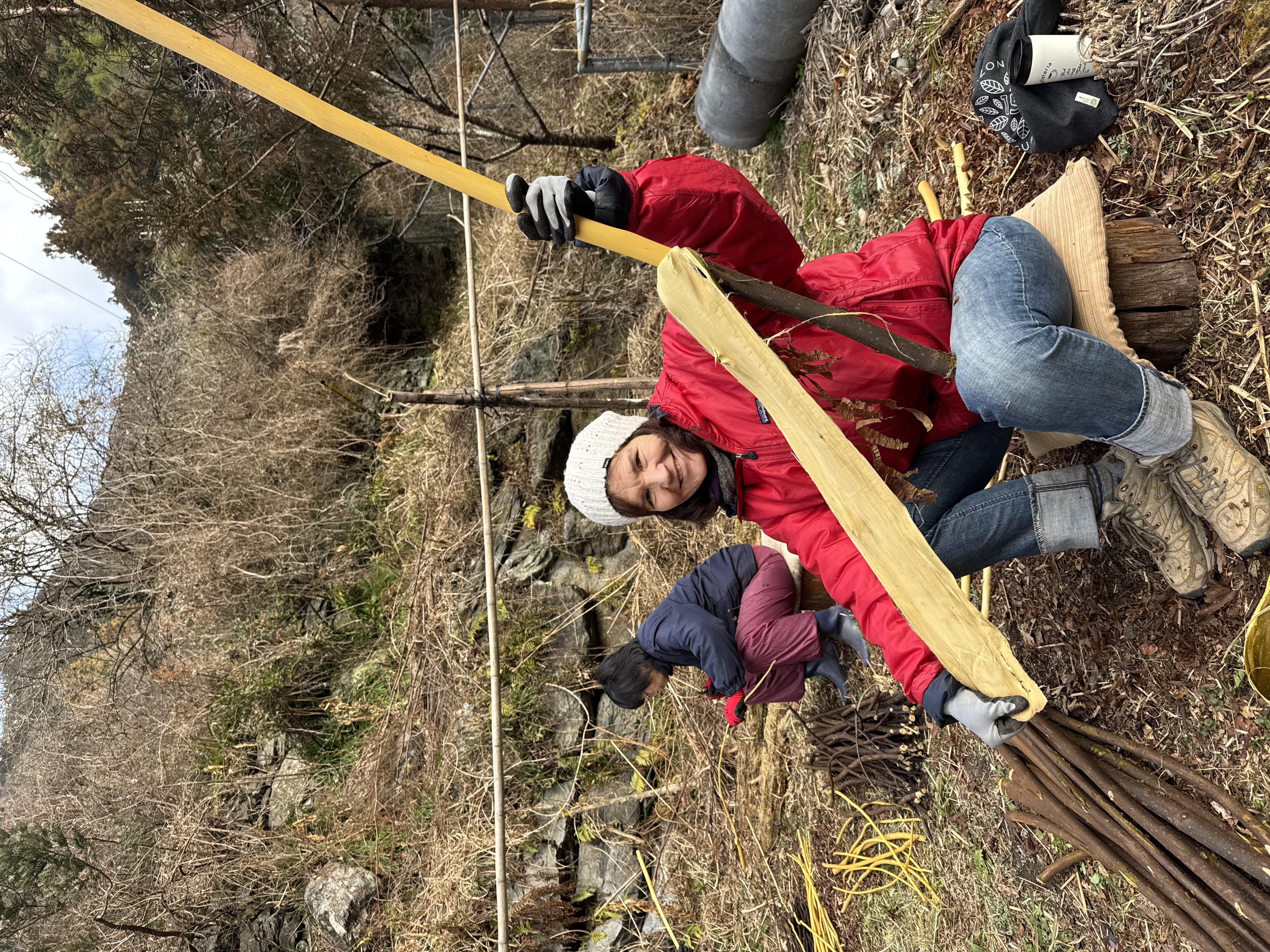
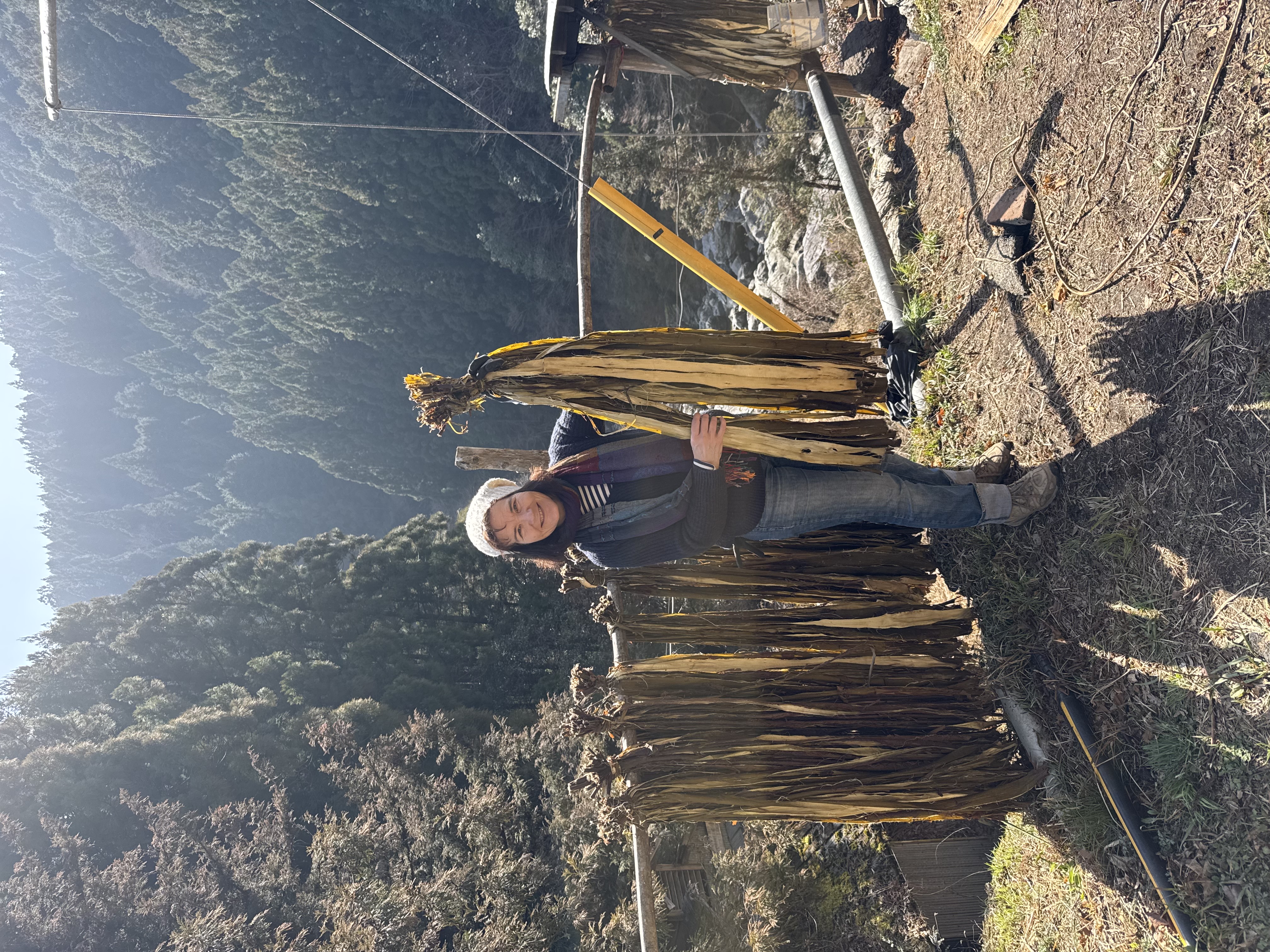
楮を剥ぐ。
三度目の冬。
はじめては、去年の山の中。
雪の降るなか、
白い息を吐きながら、枝を手に取った。
あの冷たさと、静けさを、まだ覚えている。
この時間は、どこか儚い。
ここにある営みは、永遠ではないと、
身体のどこかで知っているから。
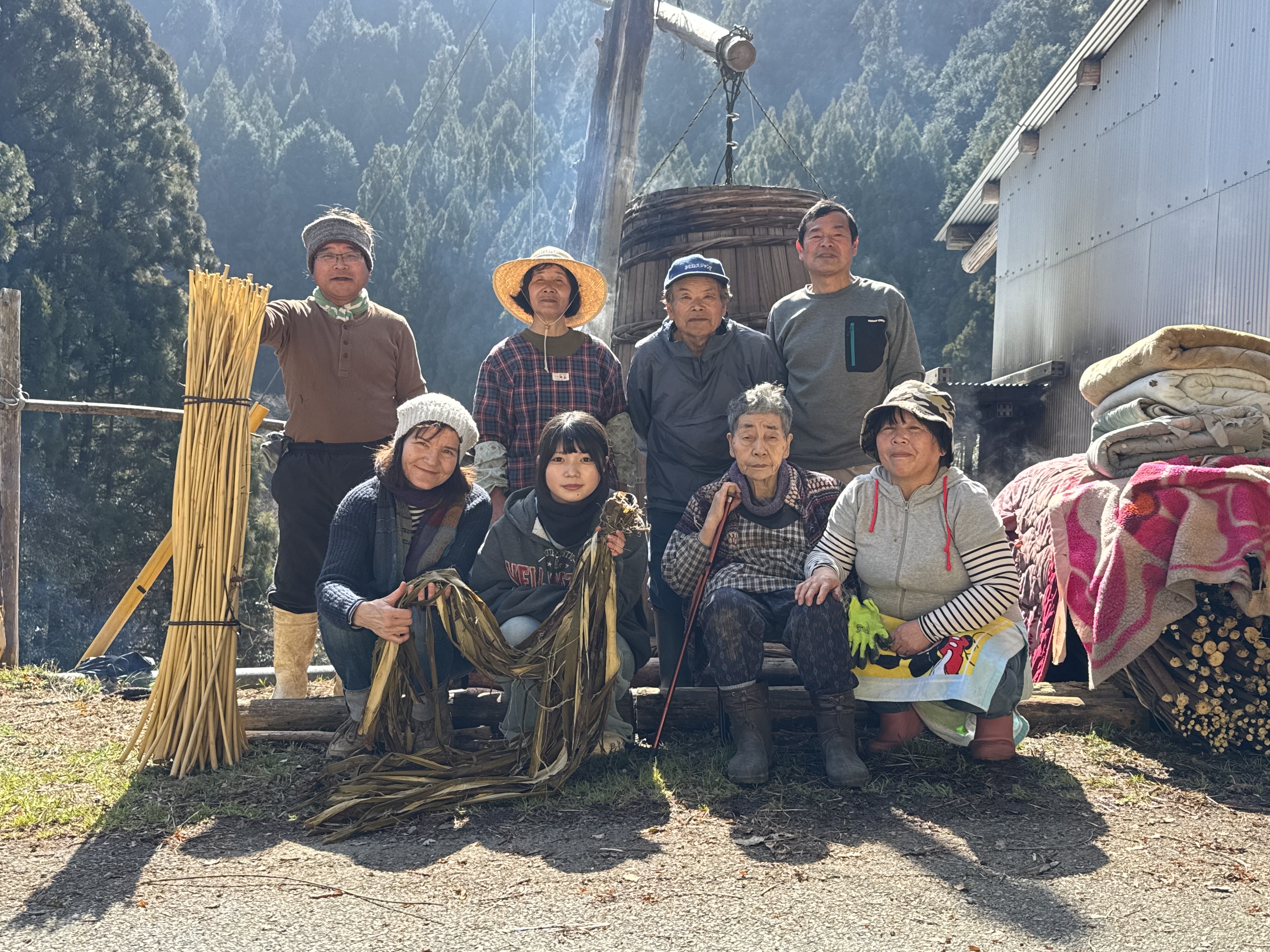
八十に近い手が、
今日も変わらず動いている。
それを受け取る人は、まだ見えない。
道は、いつか草に覆われる。
その気配が、もうすぐそこにある。
だから私は、この時間を、息のように胸に入れる。
記憶の奥へ、そっと沈める。
どれくらい続くのか――
それは、誰にもわからない。
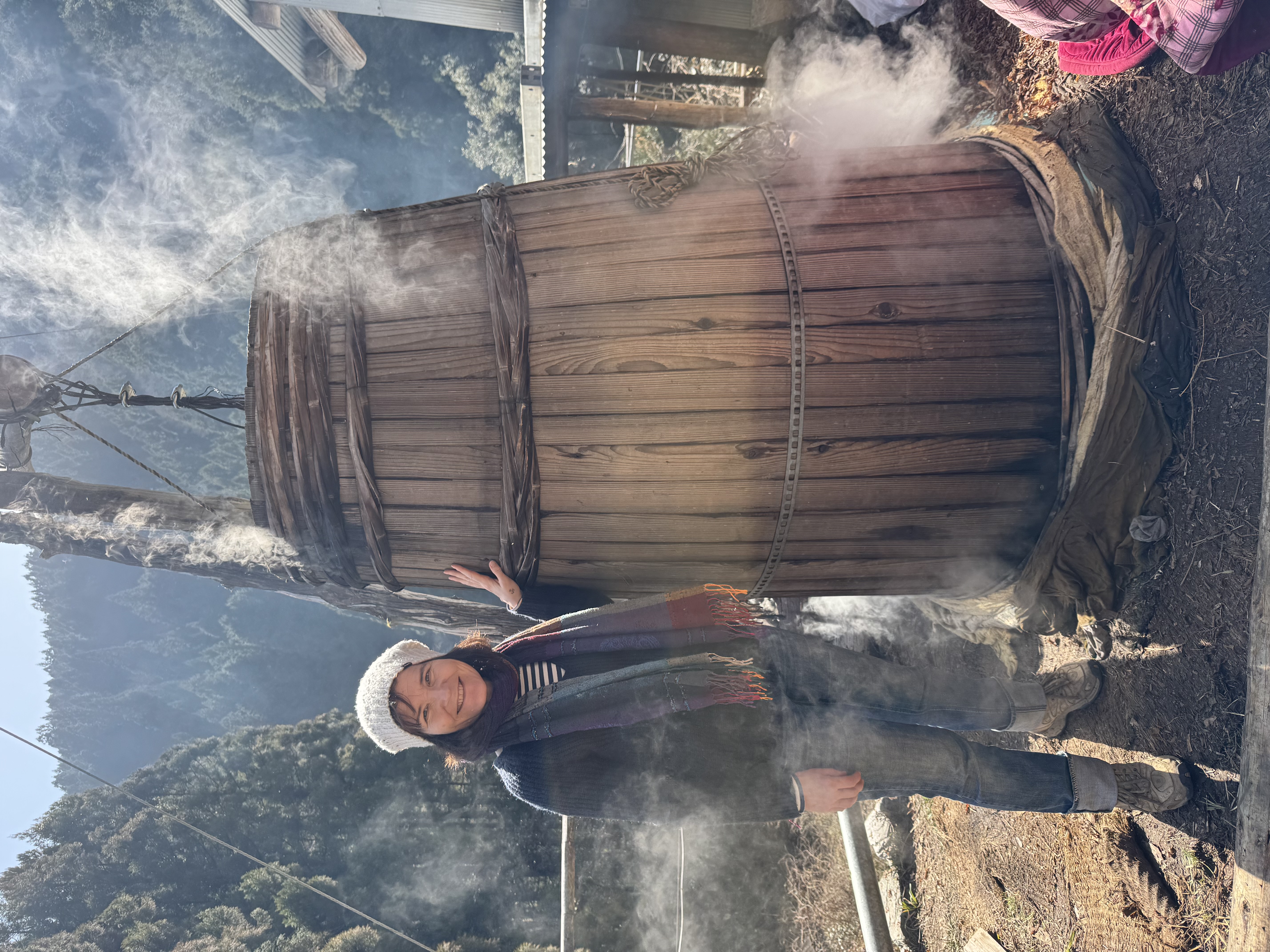
水の上に、樽が据えられ、
木の格子が置かれ、その上に、楮が並ぶ。
湯気が立ちのぼる。
時間が、ゆっくりとほどけていく。
皮はやわらぎ、剥がれる準備をはじめる。
その上に、さつまいも。
火のそばにも、いくつか。
甘い匂い。遠い記憶。
焚き火の中の、子どものころ。
朝がふたつ、過ぎていく。
手は動き、声が交わり、
笑いが、あたたかく残る。
歴史。ぬくもり。
ともに働く時間。
それらが、静かに心を満たしていく。
また来年、ここで。
同じ手で、同じ作業を。
そう願う。
この技が、もう少しだけ、長く続くように。
そしていつか、
若い誰かが、この山へ戻り、
再び手を伸ばすように。
そのときまで――
紙は、まだ、ここにある。
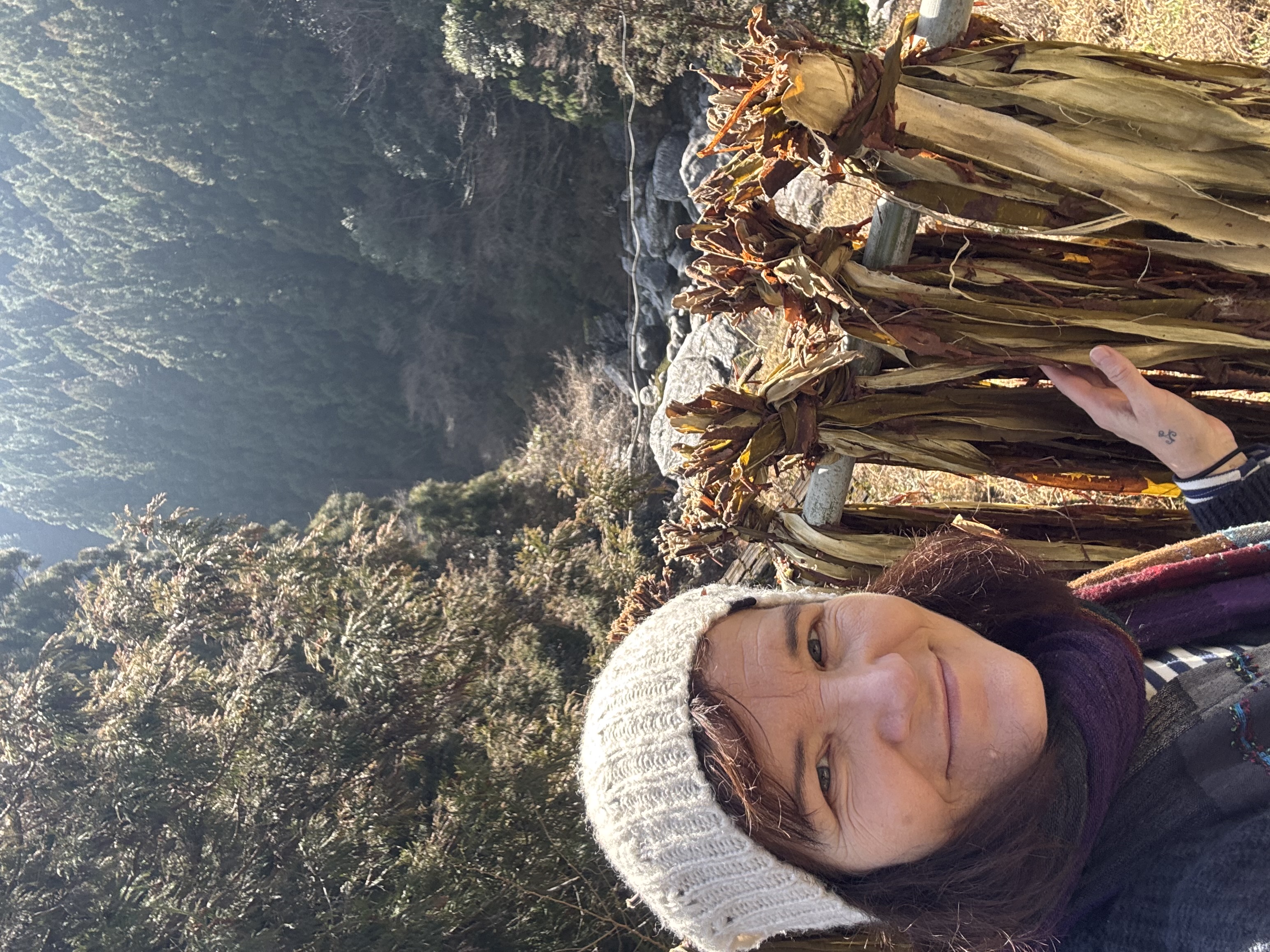
Peeling Kozo – Preparing for Washi Papermaking
Once again, I went to make Japanese paper, washi. Or rather, to take part in the preparation work. At first, it doesn’t look anything like paper at all — and that’s exactly what makes it so fascinating. It’s incredible to think how, at some point, tree bark transforms into paper, something we can hardly imagine living without.
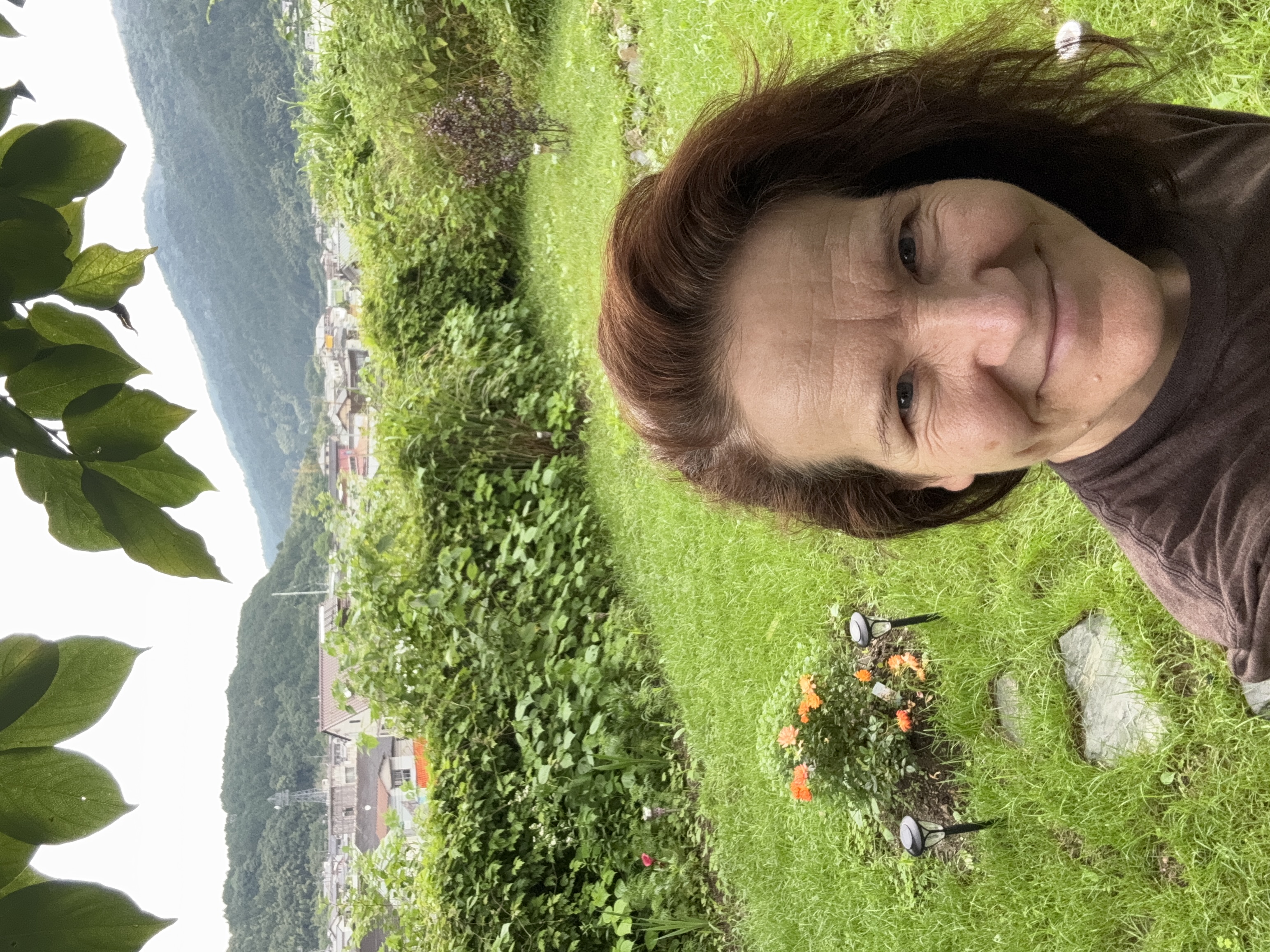
So far, I have been peeling kozo, the mulberry tree. This was already my third time volunteering for kozo peeling. Last year, here in the mountains, I had my very first experience. I still remember peeling my first mulberry branches during the snowfall.
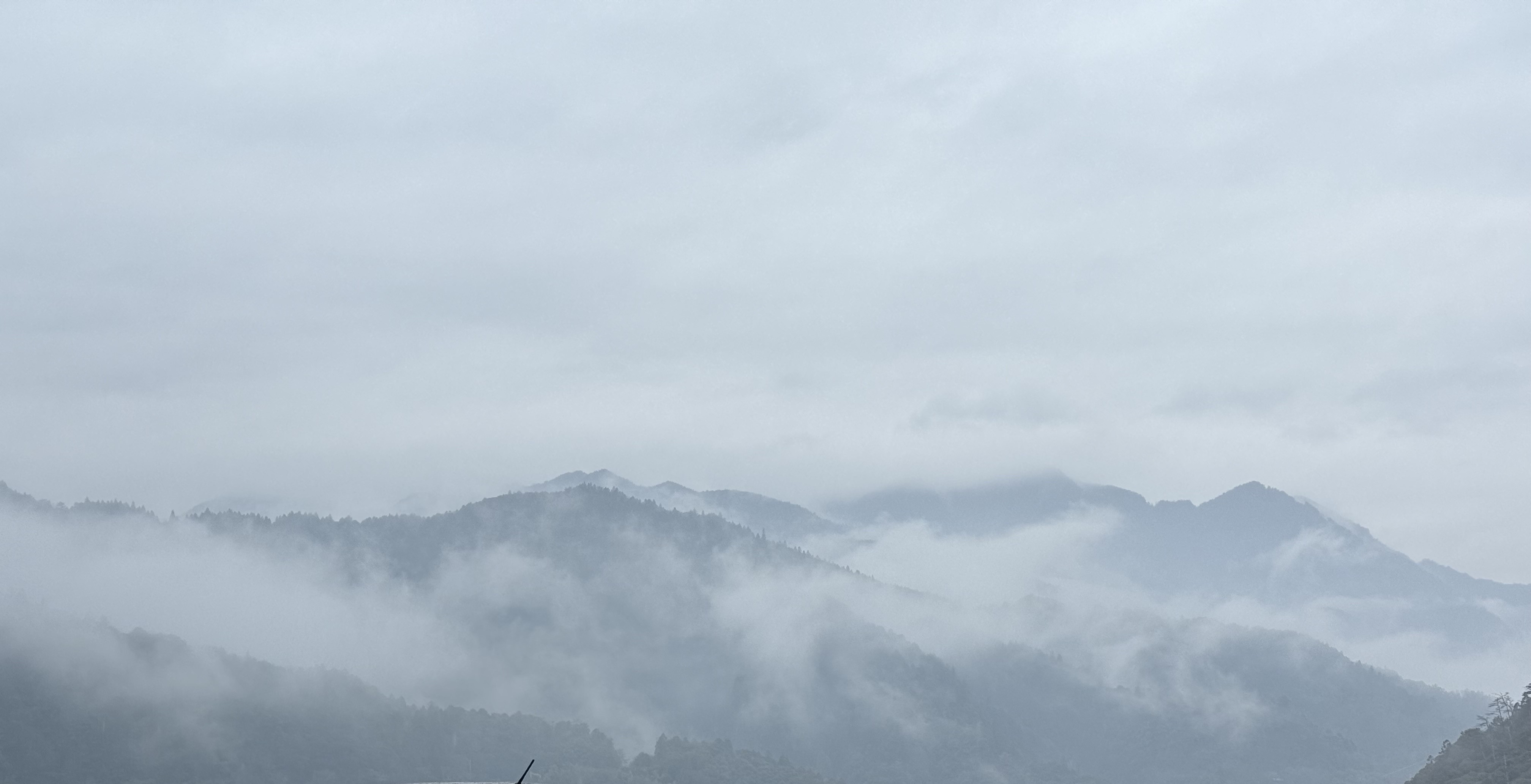
That authentic experience in the middle of the mountains touched me deeply. Perhaps because I sense that the opportunity to peel kozo bark like this may not be around for much longer. Sadly, in just a few years, even here among these mountains, a historical path may become “overgrown” and find its end. The current handmade papermakers here are approaching close to their 80 years of age, and there seem to be no people who want to take this job over and are ready to continue this work. So I breathe this experience into my heart and into my memories… who knows for how long this possibility will be alive.
Before the peeling could begin, a large barrel was pushed over a big water container. A wooden lattice was placed on the top of the water container, and bundles of kozo branches were laid across it. The steaming took several hours so that the bark would loosen easily.
Since sweet potatoes are very popular in Japan, one of the ladies placed a bowl of them on top of the kozo branches to steam as well. Some were set near the edge of the fire to cook. It reminded me of my own childhood, when we baked potatoes in a campfire.
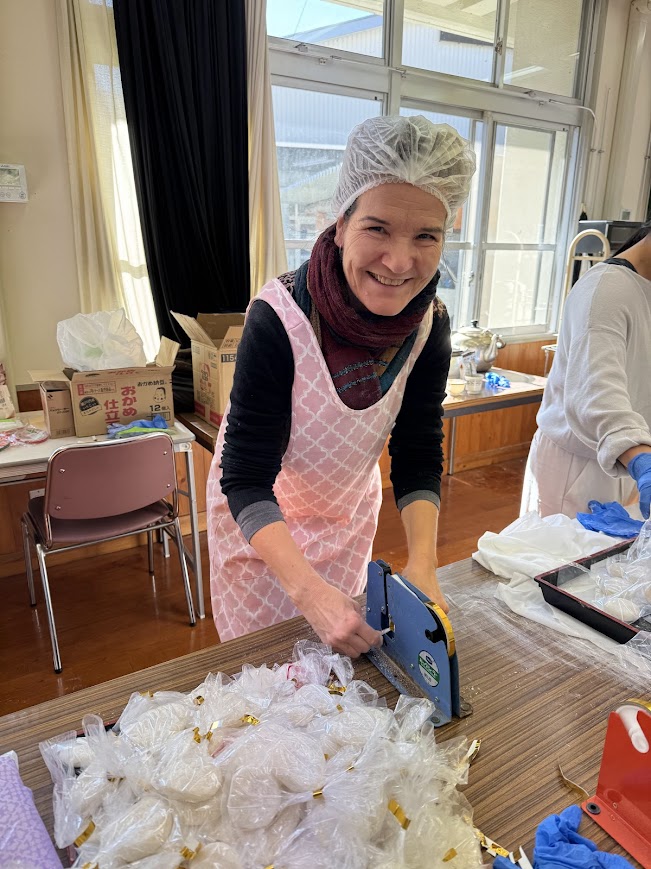
After two consecutive mornings of peeling kozo, my heart was filled with a sense of history, human warmth, shared work, and laughter and our jokes. I truly hope we will gather again at the beginning of next year to peel kozo together.
May this ancient art of papermaking continue for a long time to come — long enough that one day a younger generation will find its way back to these mountains and keep this beautiful tradition alive.