

夏 ― 祭りの波
日本の夏は、祭りの季節です。
7月の終わりから、私はすでにいくつもの祭りに足を運びました。8月の初めには、なんと3日間続けて、それぞれ違う祭りを訪れることになりました。
どの祭りにも、それぞれの土地ならではの個性があります。大都市の祭りはより華やかで大規模なものが多い一方、小さな山村で行われる祭りは、地域の人々が一緒につくり上げる、よりコミュニティに根ざしたものが多いように感じます。
阿波踊り(あわおどり)
私は以前、「阿波(あわ)」が徳島県の昔の呼び名だったことを知りませんでした。
阿波踊りは、私がかなり前から一度体験してみたいと思っていた祭りのひとつです。
阿波踊りは、日本で最も古い祭りのひとつです。今年、高知のよさこい祭りでは自分自身が踊らなかったので、私はどうしても阿波踊りを訪れ、この古くから続く祭りが与えてくれると言われている、あの特別な感覚を自分の身体で感じてみたいと思いました。
ただ踊るだけではない何か――。
もっと深い意味を持つ、ひとつの儀式のようなものなのではないか。そんなふうに感じていた祭りでした。
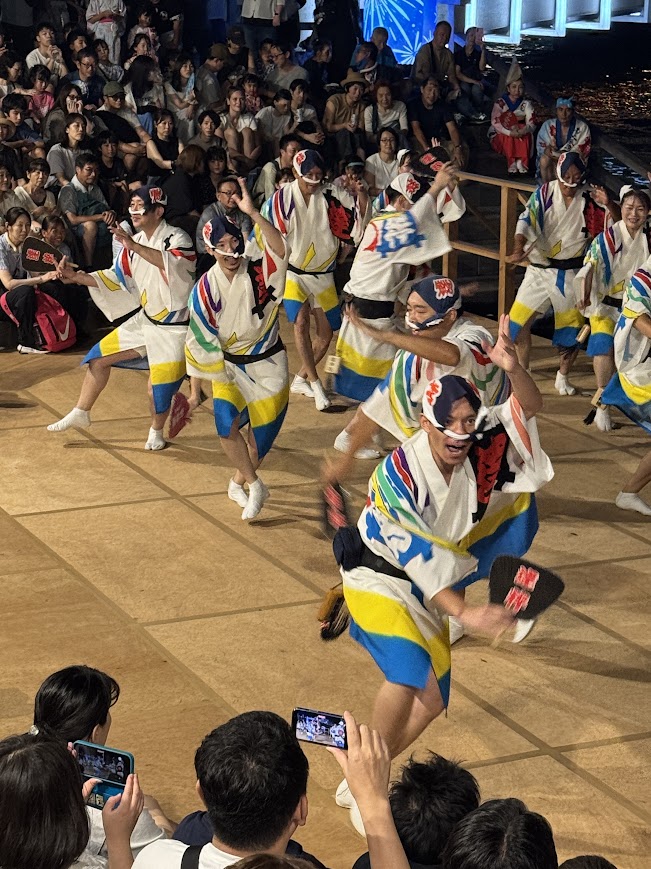
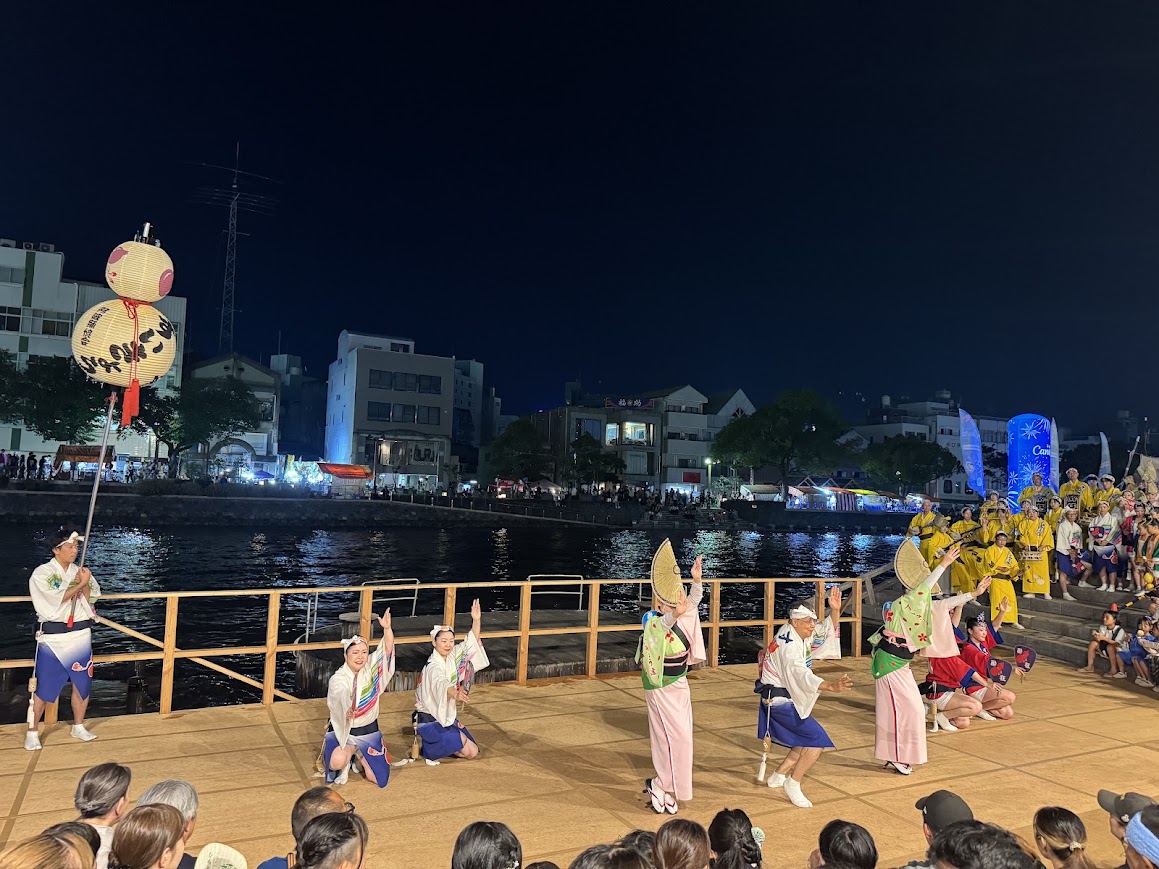
夕暮れが近づくにつれて、街の通りが大きな踊りの舞台へと変わっていく様子を見るのは、とても魅力的でした。
踊り手たちは通りを進みながら踊り、それぞれの連(れん)には独自の名前、踊りのスタイル、衣装、そして演奏する音楽があります。
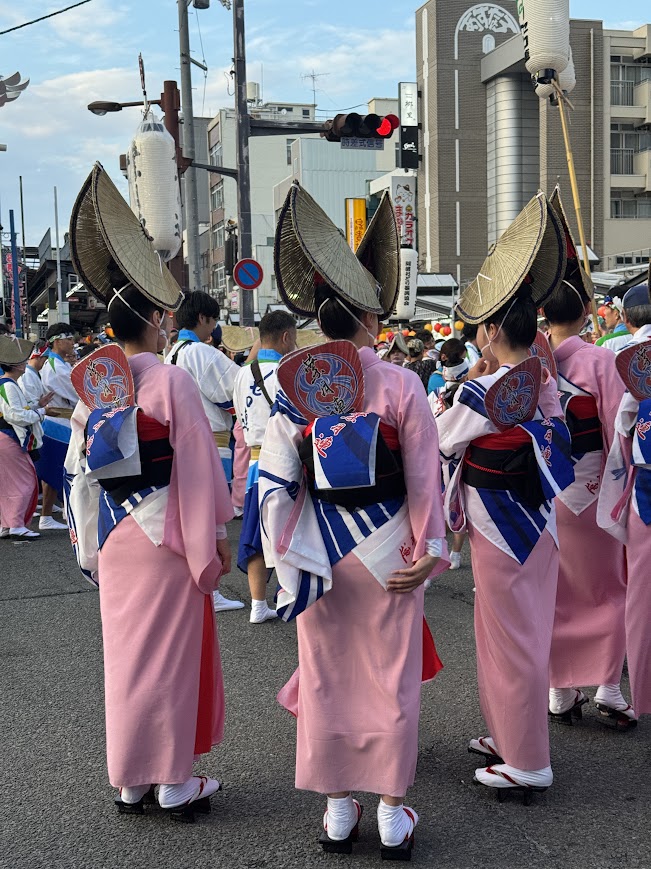
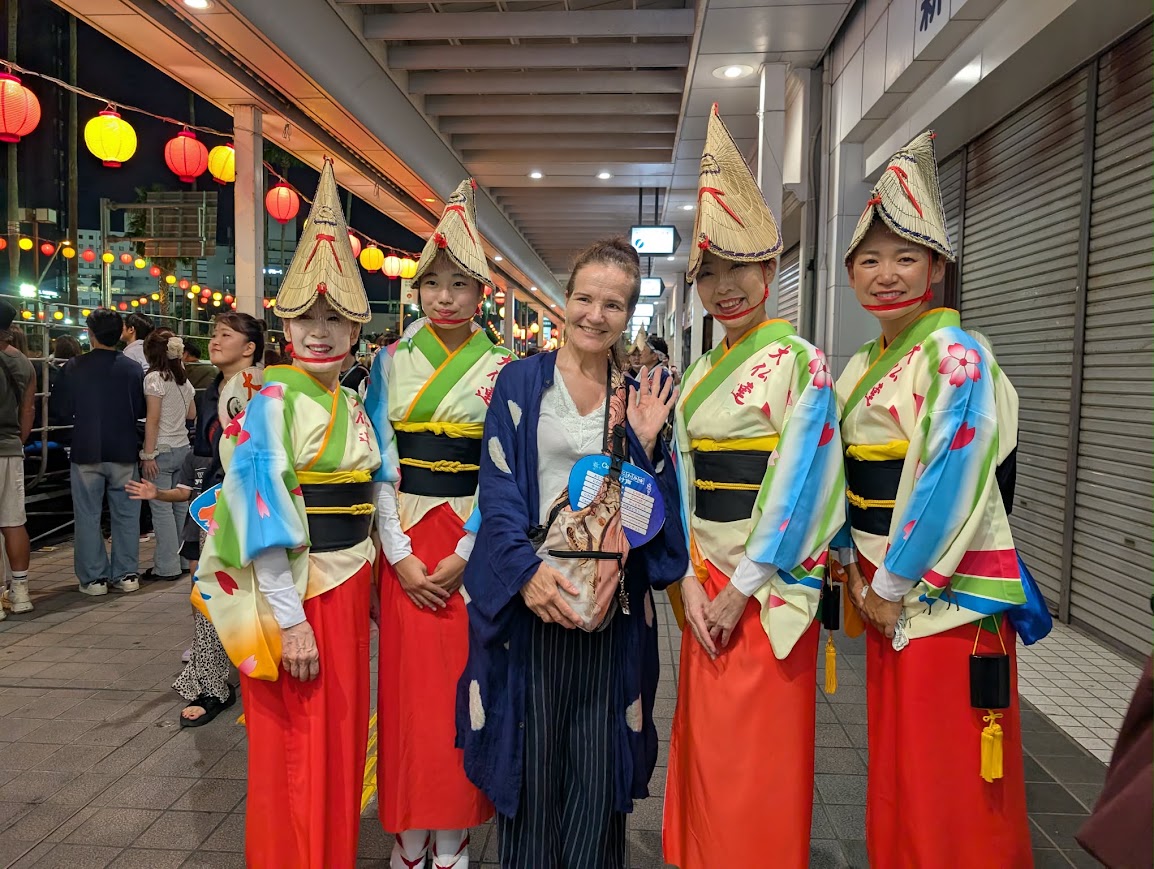
女性たちは伝統的な祭りの衣装や浴衣を着て、編み笠(あみがさ)をかぶっていました。その動きは優雅で、しなやかでした。
一方、男性の踊りはもっとエネルギッシュで、力強く、大きな足運びが特徴的でした。
とはいえ、現在ではこの二つの踊り方の違いは、それほど厳格なものではないようです。
女性が「男踊り(おとこおどり)」のスタイルで踊ることもできますし、男性が「女踊り(おんなおどり)」を踊ることもあります。
音楽(おんがく)
音楽がなければ、阿波踊りは阿波踊りにはなりません。
私は、祭りの楽器が奏でる音にすっかり魅了されました。
太鼓、三味線、篠笛(しのぶえ)、そして「かね」と呼ばれる小さな金属製の鐘や鉦(かね)。
そして、その背景では、歌い手たちがメロディーを歌っていました。
音楽もまた、踊り手たちと一緒に通りを進んでいきます。
祭りはステージの上だけで行われているのではありません。
祭りそのものが、絶えず動き続けていたのです。
つづく… https://tosacho.com/summer-the-wave-of-festivals-2/
Summer in Japan is festival season. Since the end of July, I have already attended quite a few festivals. In early August, things even worked out so that I spent three days in a row visiting different festivals. Every festival has its own local character. Festivals in the big cities tend to be grander, while those in small mountain villages are more community-centred.
AWA ODORI
I did not know before that “Awa” was the old name of Tokushima Province. This was one festival I had been dreaming of experiencing for quite some time. Awa Odori is one of Japan’s oldest festivals, and this year, as I did not dance myself at the Yosakoi Festival in Kochi, I really wanted to visit Awa Odori and experience that special feeling in my body that this ancient festival is said to offer. A festival that seemed to be something more than just dancing, — almost a ritual with a deeper meaning.
It was fascinating to watch the city streets transform into vast dance spaces as evening fell. Dancers moved through the streets and every team has its own name, style, costumes and musicians.
The women wore traditional festival clothes or yukata, together with amigasa hats. Their movements were elegant and graceful. The men’s movements were much more energetic, with stronger, more powerful steps.
That said, the distinction between the two dance styles is apparently not as strict nowadays. Women can also dance in the otoko odori style, while men can dance onna odori.
THE MUSIC
Awa Odori would not be Awa Odori without its music. I was captivated by the sound of the festival instruments. There were taiko drums, shamisen, shinobue bamboo flutes and kane, the small metal bells (gongs). In the background, singers carrying the melodies.
The music moved through the streets together with the dancers. The festival was not only on the stage, but it was constantly in motion.
To be continued… https://tosacho.com/summer-the-wave-of-festivals-2/